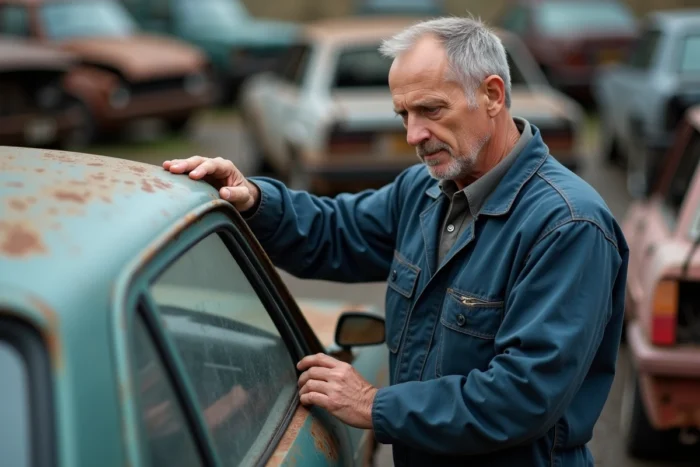
We’ve all had that moment: the mechanic announces that the repair costs more than the car itself. The instinct is to look for someone who can take the vehicle and especially how much we can get for it. The answer depends less on the Argus rating than on the type of interlocutor chosen and what the vehicle still contains that can be valued.
Recoverable spare parts: the real lever for the buyback amount
Competitors often talk a lot about price ranges, rarely about what concretely determines them. The amount obtained for a vehicle destined for destruction primarily depends on the inventory of still usable parts.
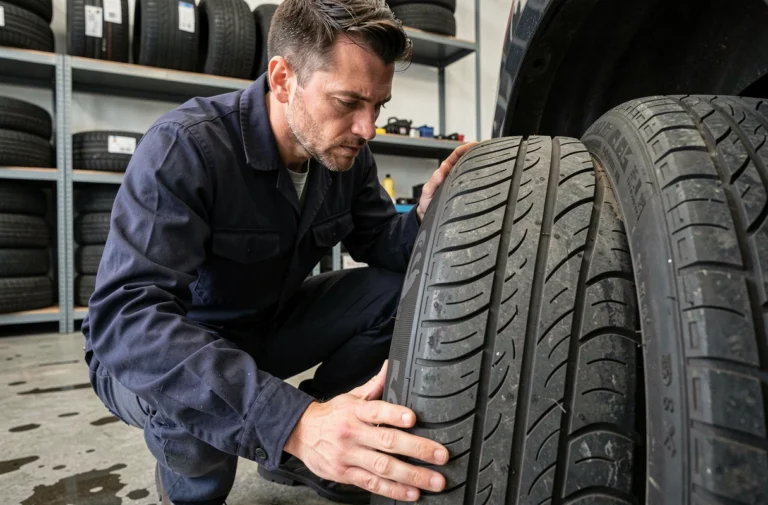
A working engine, a functional gearbox, or a recent turbo radically changes the situation. For a premium vehicle (BMW, Audi, Mercedes), these components sell for a high price in the second-hand parts market. Conversely, a vehicle with a seized engine and heavily damaged bodywork is worth little more than its weight in scrap metal.
The calculation is based on the resale value of the parts, not on the age of the vehicle. A ten-year-old minivan with a healthy engine and good condition seats can fetch more than a five-year-old sedan that is damaged in the front. When considering the buyback of a car for scrap, this logic of valuing parts takes precedence over everything else.
Some elements that increase the price:
- Functional mechanical parts (engine, gearbox, alternator, starter), especially if they correspond to models still common on the French roads
- Sought-after electronic equipment (ECUs, screens, sensors), particularly on SUVs and recent vehicles
- The catalytic converter, whose precious metals (platinum, palladium, rhodium) sometimes represent a significant part of the residual value

Approved VHU center, scrap dealer, online buyer: who offers what
These three sectors are often confused. They do not offer the same service or the same amount.
The approved VHU center (end-of-life vehicle) is the only one authorized to declare the administrative destruction in the registration system. The handover of a complete vehicle is free there. However, many VHU centers do not pay or pay very little for the buyback, especially if the vehicle has no more recoverable parts. Their business model relies on recycling, not on buyback.
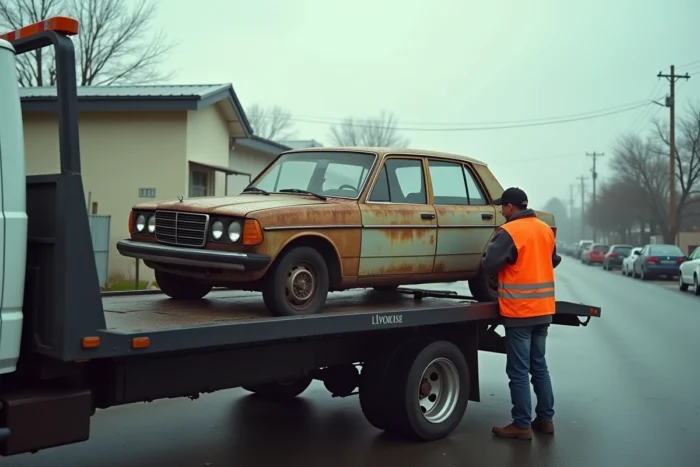
Scrap dealers often offer free pickup, sometimes a small amount. Returns vary on this point: some owners receive a few dozen euros, while others are charged for transportation if the vehicle is difficult to access or incomplete.
Online buyback platforms (like Delivauto, GVAuto, or equivalents) operate differently. They estimate the vehicle remotely based on its declared condition, brand, and mileage. The online estimate provides a firm price before the visit, which avoids unpleasant surprises. These buybacks also concern running cars of low value, not just wrecks.
Beware of wild buybacks
In recent years, prefectures have warned about the increase in fake scrap dealers. Flyers on windshields, small ads promising a quick buyback without formalities: these practices expose the seller to concrete legal risks. Without a destruction certificate issued by an approved center, the seller remains responsible for the vehicle. Fines continue to arrive in their name, and they risk prosecution for abandonment of wreck.
Low emission zones and old diesels: why the buyback amount decreases for certain vehicles
The expansion of low-emission mobility zones (ZFE-m) in major French urban areas accelerates a phenomenon that general guides underestimate. Diesel vehicles classified as Crit’Air 3, 4, and 5 can no longer circulate in an increasing number of metropolitan areas.
The result: these vehicles lose their outlet in the local second-hand market. A Crit’Air 4 diesel that was still selling for a few hundred euros three years ago can no longer find a buyer today in the affected areas. These old diesels go directly to scrap without going through resale, which increases the supply of end-of-life vehicles and drives down buyback prices.
For owners of these vehicles, the conversion bonus (formerly the scrapping bonus) remains a more interesting lever than buyback by a VHU center. Its amount depends on the household income and the type of vehicle purchased as a replacement, but it often far exceeds what a demolisher would offer.
Administrative steps before destruction: documents not to forget
On the ground, this is often the step that is rushed. We focus on the amount and neglect the paperwork, which creates problems months later.
Before handing over the vehicle, one must prepare:
- The registration certificate (carte grise) crossed out with the mention “sold on” or “transferred for destruction on,” dated and signed
- The Cerfa transfer form (15776), filled out in two copies
- A valid identity document
- The online transfer declaration on the ANTS website within fifteen days
The VHU center returns a destruction certificate, the only document that definitively frees the owner from any responsibility for the vehicle. Without this certificate, one remains liable for fines, parking, or even a possible accident if the vehicle is fraudulently put back into circulation.
One last point that many discover too late: an incomplete vehicle (without engine, without wheels, without catalytic converter) can incur additional handling fees at certain VHU centers. It’s better to check this point before dismantling anything yourself.