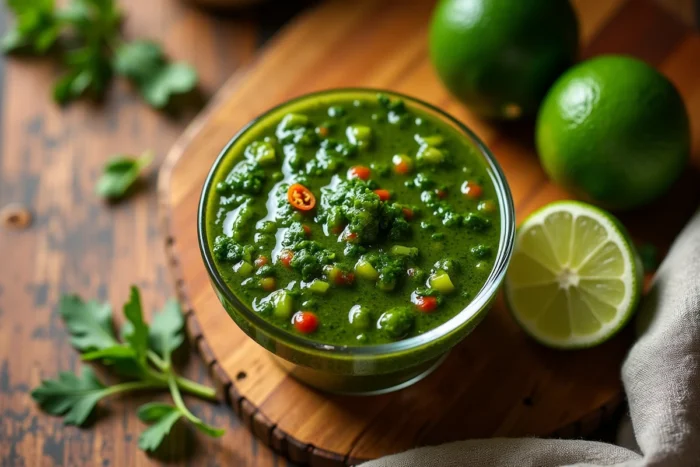
The sauce chien is a raw condiment of Antillean origin, made from fresh herbs, chili, lime, and hot water. Prepared without cooking and without a significant amount of added fat, it serves as a flavor enhancer for grilled meats, fish, and shellfish in Martinique and Guadeloupe.
Nutritional profile of sauce chien compared to creamy sauces
The base of sauce chien relies on fresh plant ingredients: flat-leaf parsley, chives (onion-pays), garlic, chili, lime juice, and oil. The boiling water poured over this mixture releases the aromas without adding significant calories. Compared to a béarnaise or a cocktail sauce, sauce chien adds flavor without resorting to saturated fats.
The benefits of sauce chien are largely due to this structural lightness: no cream, no melted butter, no industrial thickener. Vegetable oil remains the only fat, and its quantity can be adjusted according to taste.
This profile makes it a condiment compatible with a balanced diet. People looking to limit their consumption of industrial sauces rich in sugars and additives find in this Antillean preparation a direct alternative, without sacrificing the taste dimension of the meal.
Composition and role of each ingredient in sauce chien
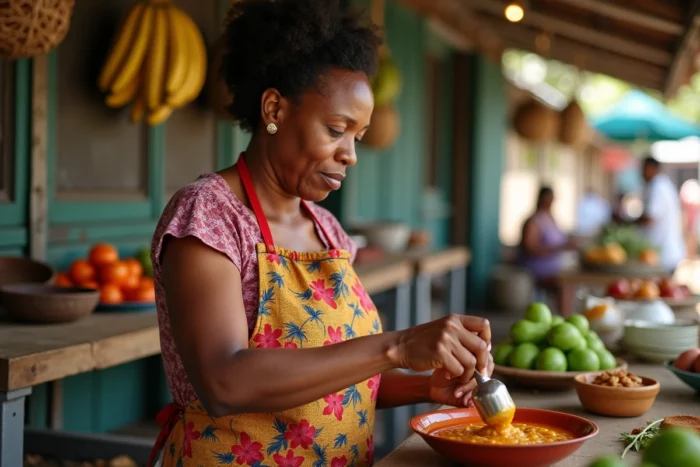
Each component of sauce chien serves a specific function. Understanding this logic allows for adjustments to the recipe without altering its essence.
- Flat-leaf parsley and chives: they form the herbaceous aromatic base. Chives, similar to scallions, add a mild sulfurous note that distinguishes sauce chien from a simple herb vinaigrette.
- Lime: the acidity of lime acts as a natural flavor enhancer. It also lightly “cooks” the herbs through an acid reaction, prolonging the freshness of the mixture.
- Antillean chili: the level of heat can be adjusted by removing or keeping the seeds. The vegetarian chili, common in the Antilles, provides flavor without excessive burn.
- Boiling water: poured over the mixture, it causes a slight wilting of the herbs that releases the aromatic oils. This step distinguishes sauce chien from a chimichurri or a salsa verde served completely raw.
- Garlic and oil: crushed fresh garlic enhances the depth of flavor, while the oil binds everything together and adds a slightly creamy texture.
The balance between acidity, spiciness, and freshness is the signature of this Creole preparation. Changing the proportions radically alters the result, which explains why each Antillean family claims its own version.
Nutritional variations of sauce chien: avocado and citrus
The traditional version stands on its own, but recent variations enrich the nutritional profile of the sauce without betraying its spirit. A site specializing in nutritious Antillean cuisine offers, for example, a sauce chien with Antillean avocados, designed to increase the intake of unsaturated fatty acids.
The avocado, blended or mashed into the base, transforms the texture into a thicker emulsion, similar to a spiced guacamole. This type of variation allows the sauce to be used as a main accompaniment to a dish rather than just a simple condiment.
Adapting sauce chien to a complete meal
With the addition of avocado or extra citrus (bitter orange, combava), sauce chien transitions from a garnish to a nutritional component of the meal. On grilled fish served with rice and vegetables, this enriched version covers part of the fiber and vitamin intake without weighing down the plate.
Sauce chien is a great substitute for maître d’hôtel butter on a piece of meat or fish. The caloric gain is real, and the range of flavors remains broader than with a simple lemon wedge.
Culinary pairings: beyond grilled fish
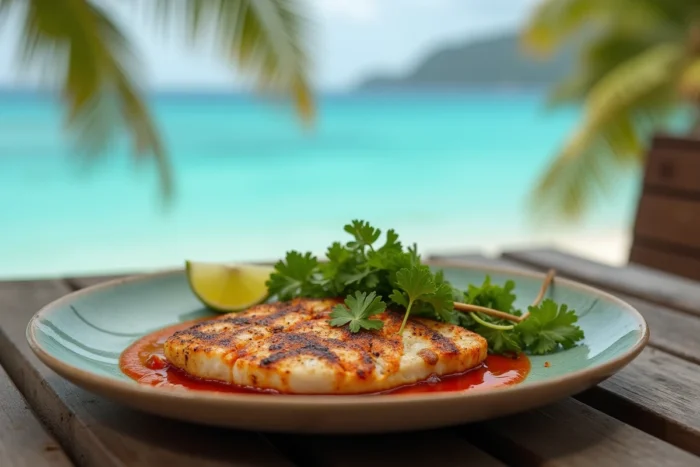
Sauce chien is traditionally served with grilled fish, cod fritters, or smoked chicken. This classic pairing works because the freshness of the condiment balances the intensity of cooking over wood fire or frying.
However, limiting sauce chien to these dishes underutilizes its potential. Its acidic and herbaceous profile also pairs well with less expected preparations:
- Roasted vegetables (sweet potato, giraumon, christophine): the sauce enhances naturally sweet vegetables with an acidic contrast.
- Raw or lightly cooked shellfish: on a lobster tartare or just-seared shrimp, sauce chien acts as an express marinade.
- Coconut-based dishes: with a colombo or a coconut milk broth, a few spoonfuls of sauce chien as a finishing touch break the roundness of the dish and add depth.
The pairing with cod deserves special mention. In Guadeloupe and Martinique, cod fritters served with sauce chien are a classic of festive meals. The saltiness of the cod, the crunchiness of the frying, and the freshness of the sauce create a contrast of textures and temperatures that few other combinations can match.
Storage and limits of a raw sauce
Sauce chien is a living preparation, without preservatives or pasteurization. It is ideally consumed within hours of preparation. In the refrigerator, it lasts one to two days, but the herbs oxidize and the chili loses its fragrance beyond that.
This short shelf life presents both a constraint and an advantage. The constraint is logistical: preparing the sauce at the last moment requires a minimum of organization. The advantage is that this fragility guarantees the absence of preservatives and additives, placing sauce chien among truly fresh condiments.
Preparation tip for ahead of time
Preparing the chopped herbs and minced garlic separately, then storing them in an airtight container in the refrigerator, saves time on the day of the meal. The final assembly with lime, oil, and hot water then takes only a few minutes. This method preserves the aromas better than a sauce fully prepared the day before.
Sauce chien derives its value from this simplicity: raw ingredients, a basic technique, a result that entirely depends on the quality of the products. In a kitchen where spices and Antillean flavors replace rich sauces, it remains a discreet yet hard-to-match staple.