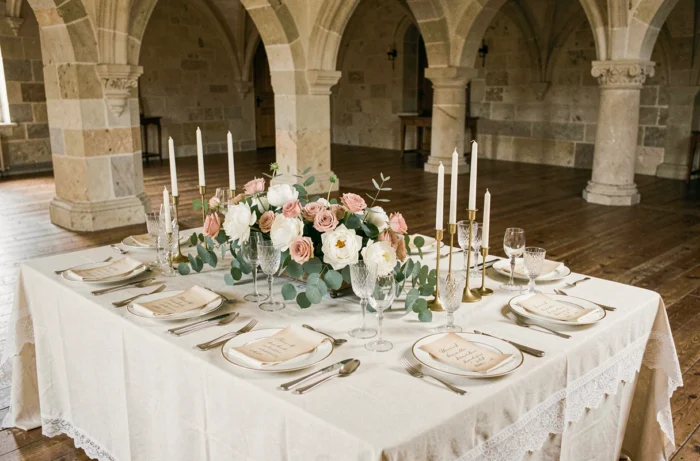
When you start planning the decoration for a wedding, the first instinct is often to collect dozens of images on social media. The result: a pile of contradictory ideas, a budget that explodes, and a venue where nothing harmonizes. To create an elegant decor, the logic is the opposite. You start from a concrete constraint (the venue, natural light, the season) and build a coherent thread around it.
Wedding Lighting: The Light Scenography Replaces Heavy Decoration
In an indoor wedding or under a marquee, artificial light is rarely flattering as it is. Neon lights or harsh spots wash out colors and flatten volumes. This is why lighting has become a fully-fledged scenographic element, not just a functional addition.
The current trend favors a mix of several sources: high-hanging sculptures or chandeliers, candles on the tables, and fairy lights around the perimeter. This principle of layered lighting creates depth without needing to fill every square meter with decorative objects.
Specifically, you can place a monumental installation above the head table (a vegetated chandelier, for example) and treat the rest of the venue with more understated indirect lighting. Reactions vary on this point, as it all depends on the ceiling height and wall color, but the principle remains the same: concentrate the visual impact on one or two areas rather than spreading the decoration everywhere.
For those who want to discover the decor on MB Mariage, it’s a good starting point to visualize compositions where light does most of the decorative work.
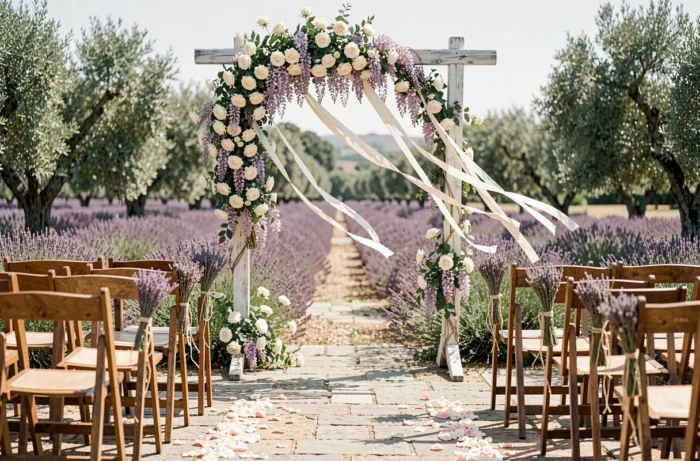
Wedding Floral Decoration: Less Volume, More Character
Giant floral arches and pampas cascades have dominated weddings in recent years. In 2026, deconstructed compositions and local flowers take over. Specialized florists describe a clear rise in nuanced monochrome palettes, where shades of the same color are favored over a variety of species.
On the table, uniformity also disappears. We now alternate between low vases, bud vases, and candlesticks along the same table, breaking symmetry without creating disorder. The effect is livelier than a row of identical centerpieces.
Choosing Seasonal Flowers for an Elegant Wedding
The choice of locally grown and seasonally harvested flowers is not just a budget issue. A peony in June will have an incomparable volume and hold compared to the same flower imported out of season. For an autumn wedding, dahlias, late garden roses, and copper foliage offer a richness of texture that exotic flowers do not replicate.
Another option gaining ground: offering compositions in reusable pots. Guests leave with a living souvenir, and we avoid end-of-the-night waste.
Wedding Table Decoration: The Detail That Structures the Whole Decor
The reception table is where guests spend the most time seated. This is where the coherence of the theme truly plays out. Three concrete levers allow for creating an elegant table without overloading it:
- The tablecloth and napkins set the overall tone. A raw linen for a rustic wedding, a thick off-white cotton for a more classic style. The base fabric conditions everything else.
- The dishes can be slightly mismatched (presentation plates of one color, dessert plates of another) as long as there is a unity of material or shape.
- Place cards and printed menus, often overlooked, serve as a connecting thread between the invitation stationery and the room decor. A consistent typography between the invitation and the menu creates an impression of care that guests notice, even subconsciously.
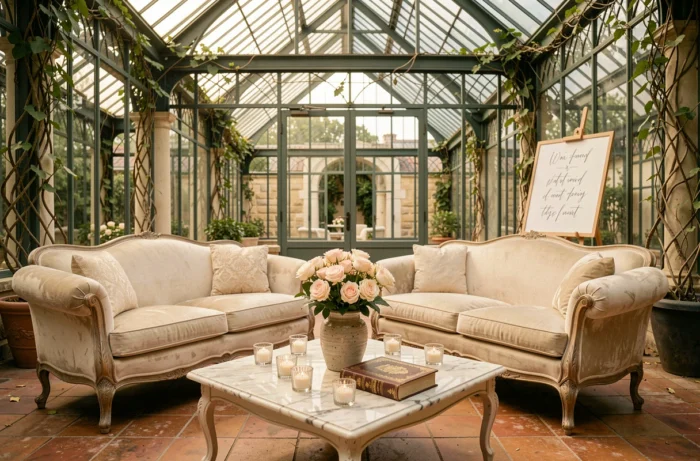
Colors and Style: Keeping a Tight Palette
We often see weddings where five or six colors coexist on the table. The result lacks clarity. Two main colors and one accent color are enough to create a rich decor. For example, a duo of white and sage green accented with touches of terracotta on the candles and napkins.
The chic style does not come from the quantity of elements placed on the table, but from their coherence. A low floral centerpiece, grouped pillar candles by threes, and a linen runner create a complete decor. Adding glitter, an extra lantern, and an additional vase does not enhance elegance; it dilutes it.
Reception Room Decoration: The Areas to Prioritize
Decorating an entire room is expensive and time-consuming. Industry professionals recommend focusing efforts on three strategic areas rather than sprinkling decorations everywhere:
- The entrance or ceremony area, the first visual contact for guests. A simple arch, a calligraphed welcome sign, or a unique floral composition is enough to set the mood.
- The ceiling or height of the room. Hanging garlands, lanterns, or fabric drapes radically transform a space, especially in rooms with exposed beams or metal frameworks.
- The head table or central buffet, which serves as a focal point throughout the evening.
The rest of the room can remain understated. Bare walls in beautiful stone or light plaster do not need to be covered with garlands. An elegant decor relies on a few strong points, not on systematic filling.
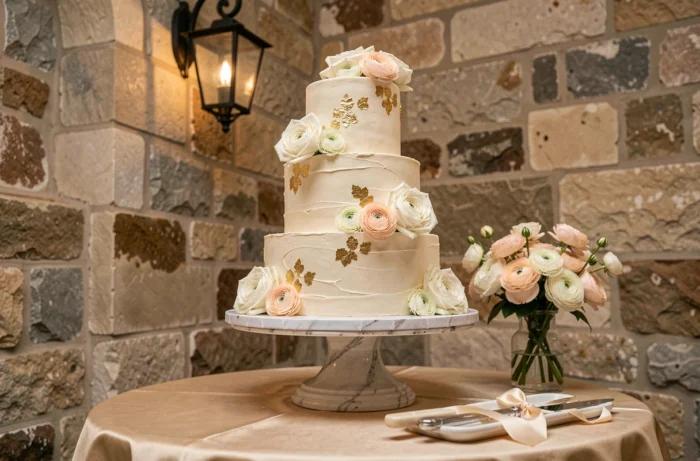
The most common trap in wedding decoration is wanting to decorate everything with the same intensity. A room where every surface bears an object, every beam a garland, and every chair a bow ends up looking like a showroom. Weddings that leave a mark on guests are those where the eye knows where to rest because someone had the courage to leave empty spaces.