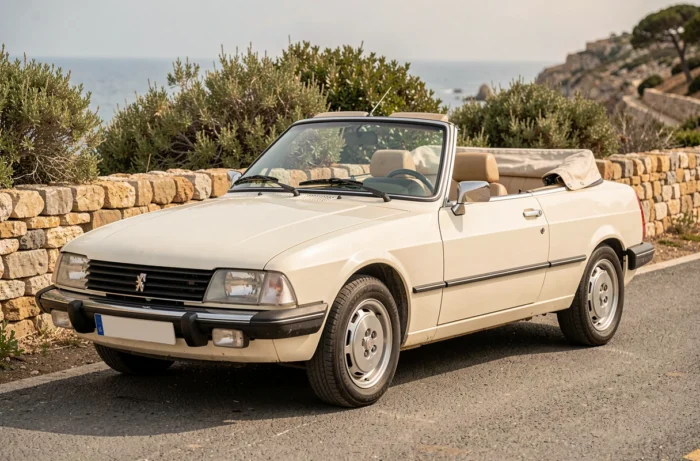
The Peugeot 305 was never included in the official catalog as a convertible. No convertible version rolled out of the Sochaux factory between 1977 and 1989. The examples that circulate today under the name “305 convertible” are artisanal transformations, carried out by independent coachbuilders or enthusiasts based on sedans or station wagons from the series. This technical reality determines everything that needs to be checked before purchasing.
Structural rigidity of a cut sedan: the critical point
Transforming a self-supporting sedan into a convertible involves removing the roof, which actively contributes to the torsional rigidity of the body. On the 305, the monocoque structure was not designed to function without a roof. We observe on existing conversions reinforcements of the side rails and floor bars added afterward, with a very variable quality of execution.
A poorly reinforced artisanal convertible shows characteristic symptoms: doors that close poorly after a few years, paint cracks at the junctions of the body, and body noises when driving on uneven roads. Chassis inspection takes precedence over aesthetic condition for any serious buyer.
The rear axle of the 305 has, however, demonstrated its robustness in another context. The Citroën C15, a utility vehicle known for its endurance in intensive professional use, borrowed the compact rear axle from the 305 station wagon. This technical lineage confirms that the running gear and the lower part of the platform can withstand significant stresses, which is a good starting point for a convertible conversion, provided that the upper reinforcement work has been carried out correctly.
To evaluate the different versions and identify the used Peugeot 305 convertible that corresponds to a realistic project, one must first identify the mechanical base used by the coachbuilder.
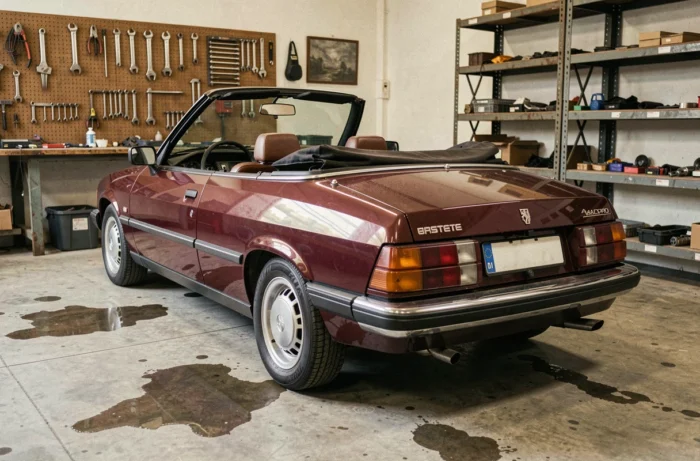
Engines of the Peugeot 305: choosing between series 1 and series 2 blocks
The 305 range is divided into two distinct mechanical generations. The first series, produced from 1977, relies on the XL5 and XR5 petrol blocks, and the XID diesel. These engines, inherited from the 304, are easy to maintain but limited in performance.
The transition to series 2 marks a major technical break with the adoption of the XU petrol blocks and XUD diesel. These engines, later shared with the 205 and 309, offer better efficiency and a significantly higher availability of parts on the current market.
For a pleasure convertible, we recommend prioritizing a series 2 base. The reasons are concrete:
- The XU blocks handle revisions better with new parts still referenced by common suppliers, whereas some XL5/XR5 references require salvage
- The GTX injection version offers sufficient torque for pleasant road use in a lightweight configuration (without a roof, the weight decreases)
- The XUD diesel versions, although less suited to the convertible spirit, ensure moderate consumption for regular trips
Corrosion on a convertible 305: areas to inspect as a priority
Corrosion is the main enemy of used 305s, and the problem is amplified on an open version. The absence of a roof exposes the interior reinforcements, wheel arches, and lower body to moisture that the original design did not anticipate.
The weld points of the added reinforcements are the first to give way. A side rail reinforcement welded onto already rusted sheet metal will not hold. Always check the inside of the rear wheel arches, the seat bench fixings, and the trunk floor, areas where water stagnates on poorly drained conversions.
On examples exposed outdoors without a hard top, the windshield seals deserve special attention. A degraded seal allows water to infiltrate the dashboard, causing corrosion that is invisible from the outside but destructive to the electrical harness and steering column supports.
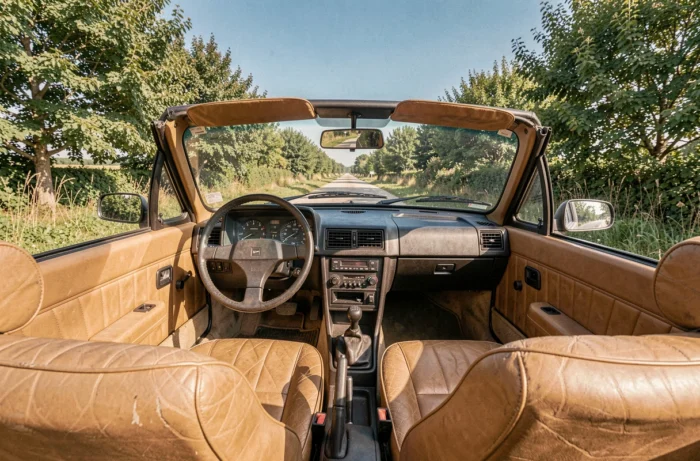
Youngtimer value and market for used Peugeot convertibles
More prestigious Peugeot convertibles (504 Pininfarina convertible, 205 CTI) are experiencing a significant increase in value on the youngtimer market. This trend indirectly benefits lesser-known derivatives like the transformed 305s, which attract collectors seeking originality within a contained budget.
A handmade 305 convertible remains accessible where a 504 convertible has skyrocketed. The price gap between these two models has widened in recent years, making the 305 convertible interesting for a first open collection project.
The number of available examples remains very low. Each vehicle is a unique case, with its own transformation history. The absence of an official series means there is no reference technical sheet or standardized value. The price primarily depends on the quality of the bodywork and the mechanical condition of the base.
Points to check before purchase
- Request documentation from the coachbuilder who performed the cut (reinforcement plans, type of welds, thickness of reinforcements)
- Check the approval with the DREAL if the vehicle has undergone a significant structural transformation, as a body modification may require individual approval
- Verify the conformity of the soft top or added hard top with the original fixings of the windshield and rear window
- Have the body geometry measured on a jig to detect any structural deformation
The used 305 convertible is not an impulsive purchase. It is a vehicle that requires cross-expertise between Peugeot mechanics from the 1980s and coachbuilding know-how. Each example is a unique piece, with its qualities and compromises, which is precisely what attracts enthusiasts of youngtimers stepping off the beaten path.