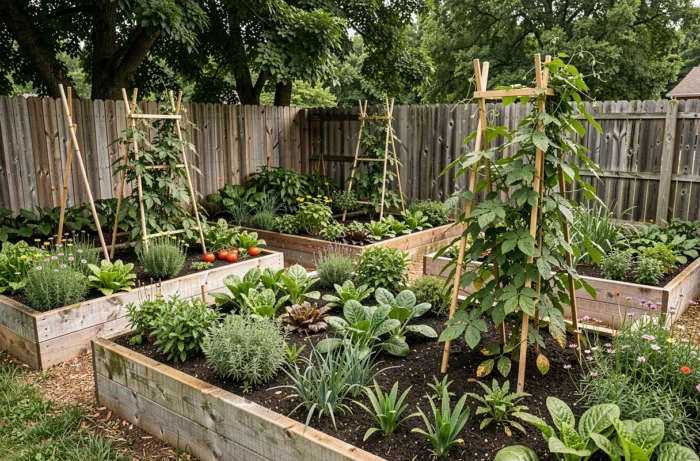
A hard ground like concrete after winter, slugs devouring young plants, tomatoes stagnating due to lack of nutrients: we have all experienced these blockages in the vegetable garden. Growing your own vegetables while respecting nature does not mean giving up on harvests. It means working with the soil and wildlife rather than against them, applying concrete actions that truly change the season.
Since January 1, 2019, the Labbé law prohibits individuals from buying, using, or holding synthetic pesticides for gardening. We start from a real regulatory constraint to build a productive vegetable garden without chemical crutches.
1. Work the soil with a grelinette rather than a tiller
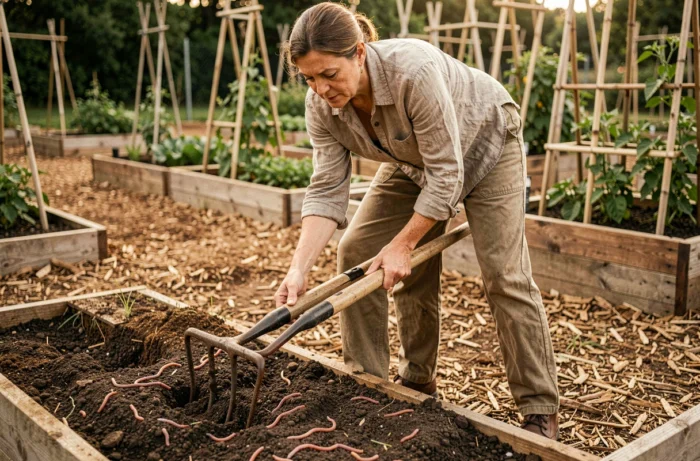
When you turn the soil with a tiller, you break the soil structure and bury aerobic microorganisms where they can no longer function. The result: soil that compacts again after a few rains and decimated earthworms.
The grelinette allows for aeration without turning. You push the tines in, tilt the handle back, and the clod cracks while keeping its layers intact. The root network and soil life remain in place. Returns vary on exact yield, but the difference in soil texture after a few seasons of use is visible to the naked eye.
To choose a model suitable for your area and morphology, detailed comparisons can be found on grelinette-warrior.com that help sort through fork widths and handle types.
The right reflex: intervene when the soil is slightly moist, neither waterlogged nor dry. Too moist, and you create sticky clods. Too dry, and the tines bounce back, making the work unnecessarily tiring.
2. Mulch all bare surfaces with local materials
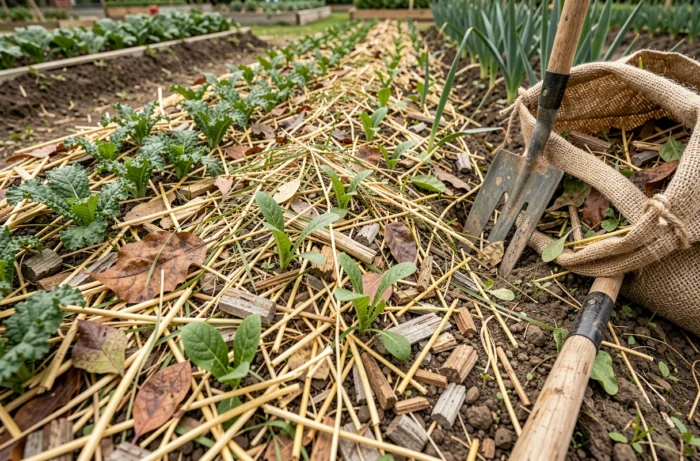
A bare soil in the vegetable garden leads to accelerated evaporation, weeds colonizing in a few days, and a crust that prevents rainwater from infiltrating. Mulching addresses all three problems at once.
We are talking about free and locally available materials:
- Dead leaves collected in autumn, ideal between winter and spring vegetable rows.
- Dry grass clippings, rich in nitrogen, to spread in a thin layer to avoid fermentation.
- Wood chip mulch (BRF) collected after hedge trimming, perfect for paths and tomato plants.
A well-laid mulch significantly reduces watering and nourishes the soil as it decomposes. For squash and zucchini, a generous layer of straw also limits the contact of the fruits with the moist ground, which slows down rotting.
3. Companion planting to limit pests and diseases
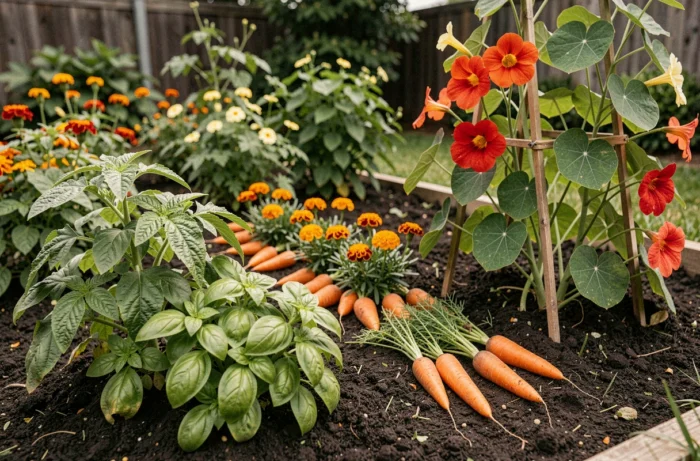
Planting tomatoes alone in three rows offers an open buffet to aphids and downy mildew. Mixing species disrupts pests, who locate their targets by smell and color.
Some successful combinations in the field: marigolds at the foot of tomatoes repel nematodes thanks to their root secretions. Basil, planted between the plants, hinders whiteflies. Carrots and leeks protect each other from their respective flies, the carrot fly and the leek moth.
Conversely, some cohabitations pose problems. Fennels inhibit the growth of most vegetables through their root exudates. They should be isolated in a corner of the vegetable garden or in a separate container.
The idea is not to follow a fixed table but to test two or three combinations each season and note what yields results in your soil and climate.
4. Install a surface composter in the heart of the vegetable garden
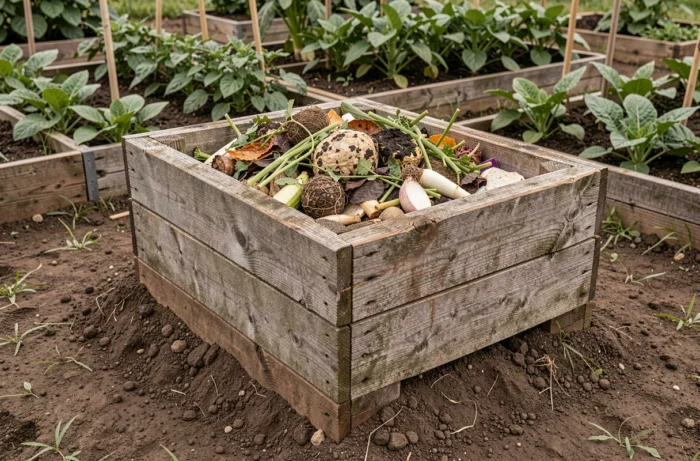
Closed bin composting has a drawback: you have to transport the mature compost to the growing beds, often several months later. Surface composting eliminates this step. You place organic waste (peels, coffee grounds, crushed eggshells) directly between the rows, under the mulch.
Earthworms and microorganisms decompose the material on-site. The soil gradually enriches with humus without manipulation. This system is particularly suitable for small areas where space for a traditional composter is lacking.
Two precautions to observe: never place meat, dairy products, or bread (which attract rodents), and fragment the waste into small pieces to speed up decomposition. Whole squash peels, for example, take weeks to break down if not cut.
5. Welcome beneficial insects with unmown areas
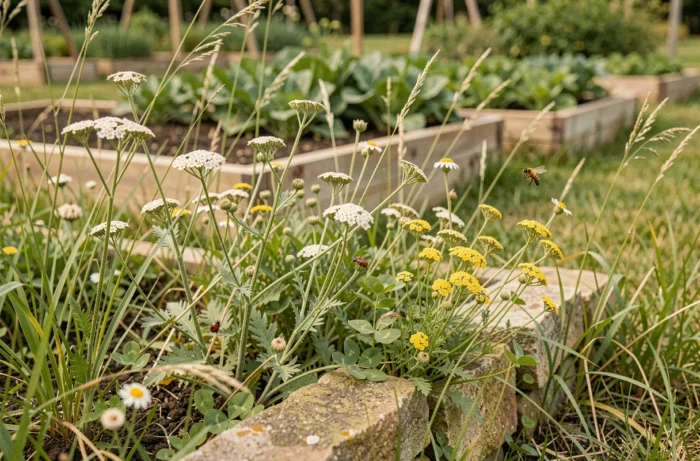
A too-clean vegetable garden is a fragile vegetable garden. Ladybugs, hoverflies, and ground beetles (which eat slugs and aphids) need refuges to reproduce and hibernate. Leaving an unmown grassy strip at the edge of the vegetable garden provides them exactly that.
Specifically, you delineate an area one to two meters wide that you only mow once a year, at the end of summer. You can sow a mix of local wildflowers (yarrow, clover, phacelia) to enhance attractiveness.
A pile of dead branches in a corner of the garden complements the setup. Hedgehogs readily settle there and consume a notable amount of slugs each night. A few flat stones placed on the ground create shelters for toads, other effective predators of gastropods.
This approach works over several seasons: in the first year, results remain modest. By the second year, you observe a natural regulation of pest populations that makes manual interventions (picking, trapping) less frequent. A vegetable garden that shelters its allies produces better, without any inputs.