A cotton t-shirt, a polyester dress, a wool blend coat: each garment worn is based on a textile choice that determines the comfort, lifespan, and environmental footprint of the finished product. Understanding the role of textiles in fashion helps to better grasp why the clothing industry has been transforming so rapidly in recent years.
Natural, synthetic, and artificial fibers: what makes up our clothing
Before discussing fashion, one must understand the material. A textile is an assembly of fibers transformed into yarn, then into fabric or knit. Three main families coexist.
Natural fibers come from plants (cotton, linen, hemp) or animals (wool, silk). They breathe well and decompose at the end of their life. Their production requires agricultural resources: water, arable land, and sometimes pesticides.
Synthetic fibers (polyester, polyamide, elastane) are made from petroleum. They offer durability, elasticity, and low cost. In return, they release microplastics during washing and are difficult to recycle when mixed with other materials.
Artificial fibers (viscose, lyocell, modal) occupy an intermediate ground. Derived from wood cellulose, they undergo a chemical transformation. Lyocell, for example, uses a solvent recycled in a closed loop, significantly reducing the pollution associated with its production.
The composition label summarizes the fiber blend and determines the feel, wash durability, and recyclability of the product. To better understand the role of textiles in fashion, this label should be read first.
Textile production and environmental impact: an industry under pressure
The textile industry is one of the most polluting in the world. The rise of fast fashion since the late 2000s has significantly amplified the volumes of clothing brought to market. Brands are multiplying short collections, low prices, and rapid renewal cycles.
The result: clothes are worn for shorter periods, discarded more quickly, and there is constant pressure on production chains. Consumers are beginning to react, placing increasing importance on quality and sustainability in their purchasing criteria.
Textile eco-design in Europe: the regulatory framework that changes the game
Textiles are no longer just a creative medium. They are becoming a regulated object whose technical characteristics condition market entry.
Since 2024, the European framework on eco-design for sustainable products (ESPR) explicitly includes textiles and clothing. This text replaces the old directive from 2009 and goes far beyond just energy efficiency.
What the ESPR framework imposes on brands
The ESPR creates a framework of requirements across several simultaneous axes:
- The physical durability of the product: resistance to pilling, seam strength, color retention after repeated washes
- Repairability: a garment must be designed to be repaired, with spare parts or accessible instructions
- Recyclability and recycled content: the materials used must facilitate sorting and recovery at the end of life
- Limiting concerning substances: certain chemical treatments (water repellents, dyes) will be more strictly regulated
A specific delegated act for textiles is planned between 2025 and 2027 to clarify these obligations. In practical terms, brands will need to rethink their materials from the design phase, not just at the marketing stage.
Digital product passport: traceability integrated into the garment
The ESPR also introduces the Digital Product Passport (DPP). This system will become mandatory for textiles. Each garment will carry a digital label (QR code or NFC chip) providing access to its manufacturing data: fiber origin, production locations, carbon footprint, repair instructions.
For consumers, this is an unprecedented transparency tool. For brands, it is a major logistical constraint that requires documenting every step of the supply chain.
Materials and ethical practices: what consumers can verify
In light of these developments, how can we make concrete choices? A few guidelines help distinguish a garment designed to last from a disposable product.
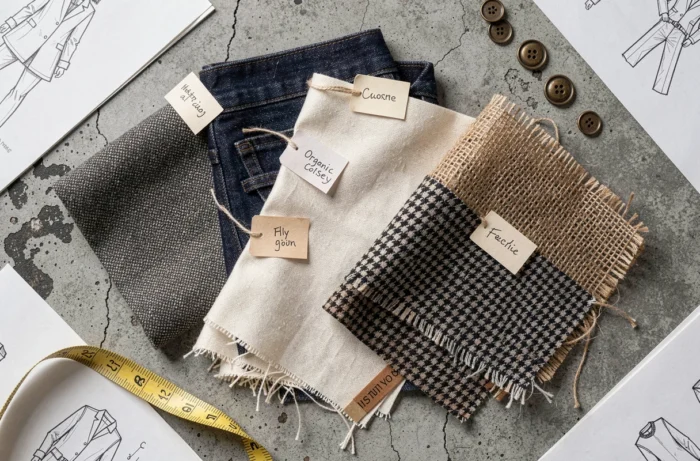
The fiber composition indicates the probable lifespan. A thick 100% cotton jean will last longer than a stretch jean with a high proportion of elastane, but will be less comfortable. A recycled cotton-polyester blend offers an interesting compromise as long as the synthetic fiber content remains minor to facilitate recycling.
The geographical origin of the materials also matters. Linen grown and woven in Europe travels fewer kilometers than cotton spun in Asia, dyed in North Africa, and made in Bangladesh. The growing interest in the country of origin of the garment confirms this trend among European buyers.
Certifications (GOTS for organic cotton, OEKO-TEX for the absence of harmful substances) remain reliable indicators, provided they are verified for the finished product and not just for the raw material.
A durable garment is recognized by its design, not its marketing label. Reinforced seams, removable linings, spare buttons provided: these details reflect a genuine intention for longevity. The ESPR framework should make these criteria measurable and comparable within a few years, which will fundamentally change how the textile industry designs its products.