The fashion of the fall 2026 season is no longer solely dictated by the runways. The growing share of second-hand items, augmented reality fitting tools, and the decline of independent multi-brand boutiques are reshaping how a silhouette is composed. Analyzing current fashion trends requires cross-referencing what emerges from the catwalks with what is actually happening in fitting rooms.
Silhouette construction through hybrid channels: new, second-hand, and algorithms
The reflex of “seasonal collection bought in-store” is losing ground. Fashion accounts for about 40% of the French second-hand market, the leading category ahead of electronics and furniture. The annual growth of this segment is around 20%, while new clothing sold online is progressing at a significantly slower pace.
This structural shift is changing the fabric of style. A bold look is now assembled by combining a recent runway piece, a thrifted blazer from a resale platform, and an accessory spotted through algorithmic selection on a specialized app. The classic journey from display to fitting room to checkout is not disappearing, but it is no longer sufficient to create a unique silhouette.
Independent multi-brand retailers are the most affected by this shift. For those seeking a unique style, this means that curation increasingly comes through online micro-communities and AI-powered thrift apps, where one can find fashion trends on Maxi Bottin before pairing pieces with a stock of second-hand items.
Key materials and colors for the fall 2026 season
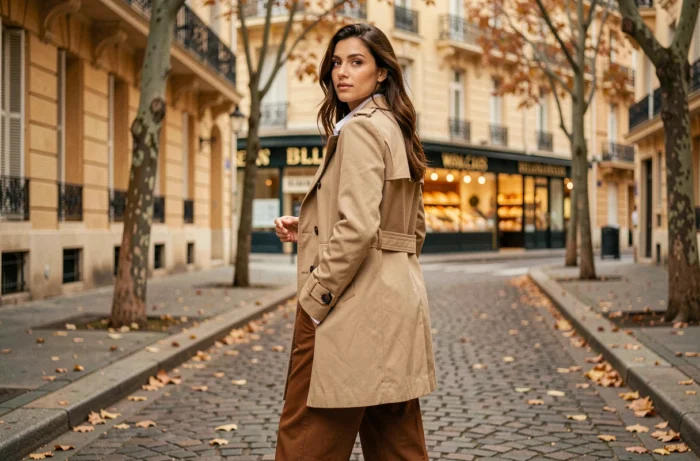
Leather remains a staple of fall-winter collections, confirmed by its massive presence on the spring-summer 2026 runways, which already announced its strong return for the cold season. We observe a shift towards soft leathers, often dyed in deep reds, worn as a total look or as a unique structural piece (short jacket, midi skirt).
On the color palette side, red emerges as the guiding color. Not a timid red: a saturated, almost glossy red that works equally well on a flowing dress as on tailored pants. Butter yellow, already visible in spring, migrates towards more muted mustard tones suitable for autumn.
Technical fabrics and artisanal know-how
The artisanal trend is gaining ground. Embroidery, irregular knits, plant dyes: handcrafted skills are becoming a marker of positioning against industrial collections. Brands that integrate these finishes into contemporary cuts stand out distinctly in a market saturated with smooth basics.
Shape-memory fabrics and post-industrial recycled materials complete the offering. Their appeal is not only ecological: they allow for drapes that are impossible to achieve with conventional fibers, opening up unprecedented silhouette possibilities.
Office-city wardrobe: dual-use pieces
The boundary between professional wardrobe and going-out attire continues to blur. Current collections offer pieces designed for this daily transition, and this is where personal style is most pronounced.
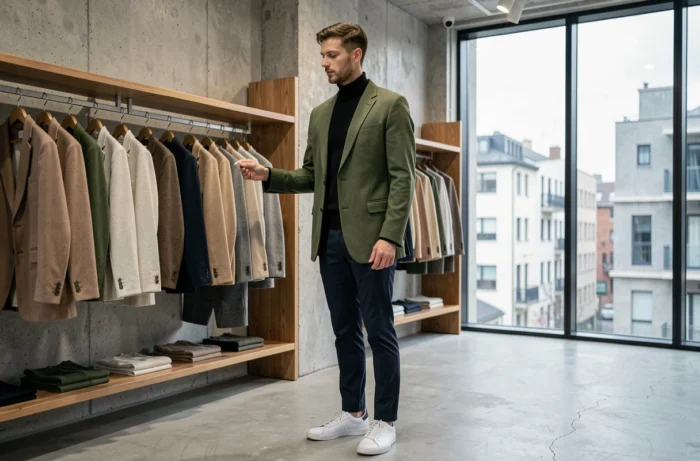
- The unstructured blazer in blended linen or thick jersey, worn with dropped shoulders at the office and then belted in the evening, replaces the rigid suit without sacrificing silhouette integrity.
- The shirt dress in thick poplin works with loafers during the day and block-heeled sandals in the evening. Its midi length, just below the knee, remains the most versatile.
- The wide pleated trousers, in cold wool or crepe, absorb temperature variations and support tucking in a t-shirt as well as a tucked-in blouse.
A dual-use wardrobe reduces the number of necessary pieces while multiplying combinations. It is a direct lever to assert a style without accumulation.
Fashion accessories and micro-trends that structure the look
Eco-responsible accessories are on the rise. Bags made from plant-based leather, jewelry in recycled metals, glasses in bio-sourced acetate: these pieces are no longer confined to niche brands. They appear in mainstream collections, making them accessible without compromising on design.
The accessory becomes the main vector of differentiation when the foundation of the look is based on classic or second-hand pieces. A structured bag in an unexpected material or an artisanal belt is enough to anchor a silhouette in the current season.
Shoes: the return of the architectural heel
Geometric, cylindrical, or asymmetrical heels are replacing the classic stiletto. This choice is not just aesthetic: the wide heel offers better support and allows for a full day of wear, which aligns with the office-city logic mentioned earlier.
Sneakers, still present, are specializing. Hybrid models (running sole, smooth leather upper) are taking over from the chunky shoes of previous seasons. Technical minimalism is replacing visible maximalism.
Assert a unique style without following the runways to the letter
Reproducing a runway look does not create a personal style. What works in 2026 is intentional assembly: choosing two or three seasonal directions (a color, a material, a type of cut) and applying them to an existing wardrobe enriched with a few targeted pieces.
The second-hand market facilitates this approach. Finding a red leather trench coat from the 1990s on a resale platform and pairing it with a current wide-leg pant creates a temporal shift that store collections cannot offer. This mix of eras, fueled by visual search tools and augmented reality fitting, has become the most effective method for building a look that resembles no other.
An assertive style is not declared by the accumulation of trendy pieces. It is built through coherence between choices of materials, colors, and cuts, applied rigorously each new season.