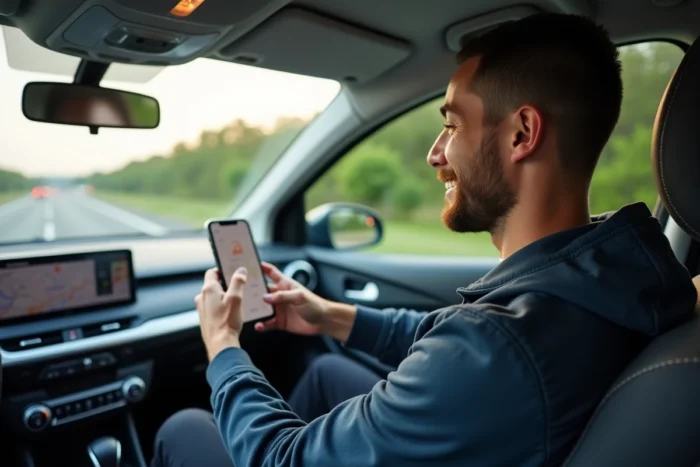
BlaBlaCar takes a commission on each booking, fuel prices fluctuate, and tolls burden the driver’s budget even before a passenger boards. Optimizing trips on the platform is not just about posting an ad and waiting. The pricing mechanisms, the recent features of the app, and the tax framework of carpooling create a more complex landscape than it seems.
Supplements and counter-proposals: the pricing lever that few drivers exploit
BlaBlaCar has introduced a feature that allows passengers to propose a supplement before booking. This supplement can relate to a different meeting point than the one indicated in the ad, bulky luggage, a stopover, or specific time flexibility.
The driver receives the request in the messaging system and has three options: accept, decline, or make a counter-proposal. This mechanism changes the game for the profitability of a trip. Charging for a detour into the city center rather than a pickup at a carpooling area on the outskirts, for example, allows covering the actual extra costs (fuel, time, parking) without changing the price displayed in the public ad.
The benefits are twofold. The base price remains competitive to attract passengers, while specific requests generate additional income tailored to each case. A driver who knows their tips for making their BlaBlaCar trips profitable incorporates this type of negotiation into their routine, rather than passively accepting the price suggested by the algorithm.

BlaBlaCar Pricing: Understanding What the Algorithm Allows You
The platform suggests a price based on distance, estimated fuel, and tolls. The driver can adjust this amount, but within a framed range. Going too high reduces the ad’s visibility. Going too low makes the trip unprofitable once the commission is deducted.
BlaBlaCar Daily, the branch dedicated to daily trips (home-work), operates on a different model. Earnings per passenger range between 1.5 and 8 euros per trip depending on distance and location. Over a full month, with two trips per working day, the platform reports an average of 120 euros in monthly savings.
These figures correspond to a scenario where the vehicle carries at least one passenger on each round trip. In practice, field returns vary on this point: regularity depends on the density of carpoolers in the geographical area, the departure time, and local competition. A suburban-metropolitan trip during peak hours fills up much more easily than a rural route at off-peak times.
Factors Affecting the Actual Price Perceived
- The commission taken by BlaBlaCar, which reduces the amount displayed to the passenger before it arrives in the driver’s account.
- The tolls, partially or fully passed on to passengers depending on the trip configuration, but which remain advanced by the driver.
- The actual fuel consumption of the vehicle, often underestimated by the algorithm for older cars or high-displacement SUVs.
- Additional costs (parking at the departure station, tire wear, insurance) that the platform does not take into account in its calculation.
Driver Contests and BlaBlaCar Promotional Operations
BlaBlaCar occasionally organizes operations reserved for drivers, with winnings independent of participation in costs. These contests offer cash rewards, distinct from the income generated by the trips themselves.
Documented example: a contest was launched around the Ascension weekend in 2025, with a prize of 1,000 euros at stake for drivers. Participation simply involved posting a trip during the relevant period.
This type of operation is unpredictable and does not constitute a regular source of income. Drivers who post frequently and maintain an active profile mechanically increase their chances of being eligible when a promotion appears. Monitoring app notifications and the official updates page remains the only way not to miss out.
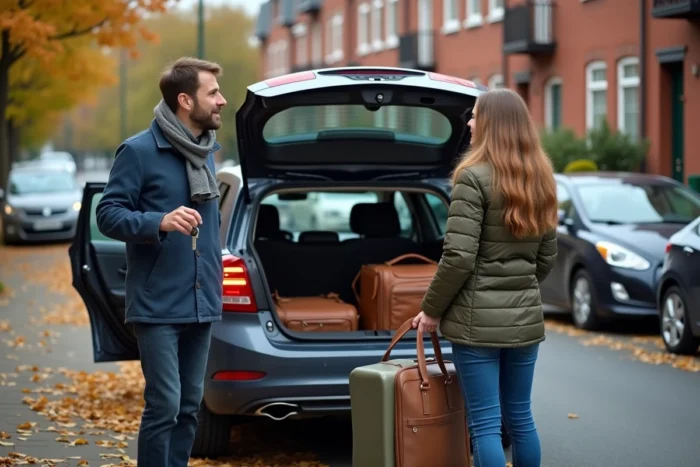
Carpooling Taxation: The Threshold Not to Exceed
Carpooling income is not systematically taxable. The principle is simple: as long as the amount received does not exceed the sharing of actual costs (fuel, tolls, wear), the driver has nothing to declare to the tax authorities. Carpooling remains a sharing of expenses, not a commercial activity.
The shift occurs when the driver receives more than what the trip actually costs them. In this case, the tax administration may reclassify the activity as a transport service, with declarative and social obligations. The exact boundary between expense sharing and professional income depends on the calculation of the vehicle’s actual costs, an exercise that few drivers conduct rigorously.
For daily use on BlaBlaCar Daily, the risk of exceeding remains low: the rates framed by the platform are calibrated to stay below this ceiling. On long BlaBlaCar classic trips, a driver who consistently fills four seats on high-toll highway routes may approach it. Keeping a monthly record of earnings and actual expenses allows verifying that one remains within the legal framework.
Driver Profile and Visibility: What Actually Fills the Seats
Posting the trip in advance (several days before departure) increases exposure time on the platform. Activating automatic booking removes the manual validation delay, which encourages impulsive bookings. Adding stopover cities multiplies possible combinations and makes the trip visible to passengers who only do part of the route.
These levers are documented by BlaBlaCar itself. What is less documented is the cumulative effect: a driver who combines early posting, automatic booking, stopover cities, and a complete profile (photo, preferences, reviews) benefits from a better ranking in the platform’s search results. The available data does not allow for precise quantification of this visibility bonus, but the highest-rated profiles consistently appear at the top of the results.
The SuperDriver status, accessible to regular drivers with excellent ratings, provides an additional trust badge. It does not change the price, but it reduces passenger hesitation at the time of booking, resulting in a higher occupancy rate on posted trips.